

For a long time, we’ve been told that stress is “all in your head.” We’re told to “just relax,” take a deep breath, or maybe try a meditation app. But if you’ve ever finished a long day at the office and felt like your shoulders were up around your ears, or if you’ve woken up with a pounding tension headache after a stressful week, you know the truth: stress is a physical event.
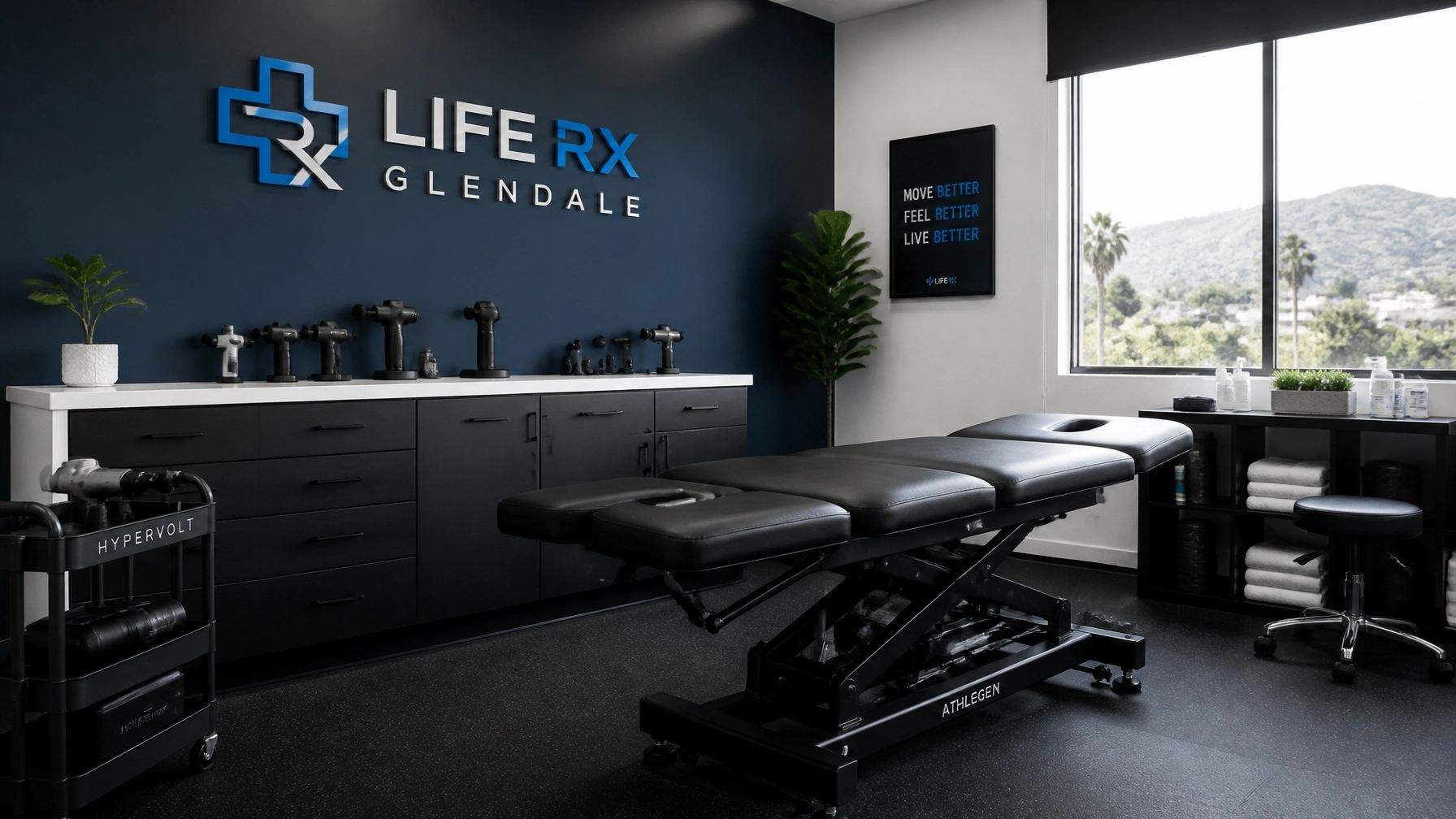
At Life Rx – PhysioMassage Therapy Los Angeles, we see it every day. People come to our Glendale clinic or book an in-home session thinking they just have a “tight muscle.” But as we dig deeper into our assessment, it becomes clear that their body is stuck in a loop. Their nervous system is screaming, and their muscles are just the messengers.
This is why everyone is talking about Stress Therapy. It isn’t just about “pampering” yourself; it is about physically dismantling the blocks that stress builds in your body.
The Physical Reality of the “Fight or Flight” Response
To understand why your neck hurts when your boss is breathing down your neck, you have to understand the “Fight or Flight” response. This is your body’s ancient survival mechanism. When you perceive a threat: whether it’s a literal saber-toothed tiger or a metaphorical mountain of unread emails: your sympathetic nervous system kicks into high gear.
Your heart rate spikes, your breathing becomes shallow and rapid, and: most importantly for your physical comfort: your muscles tense up. They are “bracing” for impact or preparing to run. In short bursts, this is life-saving. But in the modern world, many of us are stuck in this state for 8, 10, or 12 hours a day.

When you are constantly “braced,” your muscles never get the signal to let go. This persistent tension leads to:
- Trigger points: “Knots” that refer pain to other parts of the body.
- Reduced blood flow: Tense muscles compress blood vessels, slowing down the delivery of oxygen and the removal of waste.
- Postural collapse: Stress often leads to a “guarded” posture: hunched shoulders, a forward head, and a tight chest.
This isn’t a mental problem you can just “think” away. It is a physical pattern that requires a physical intervention.
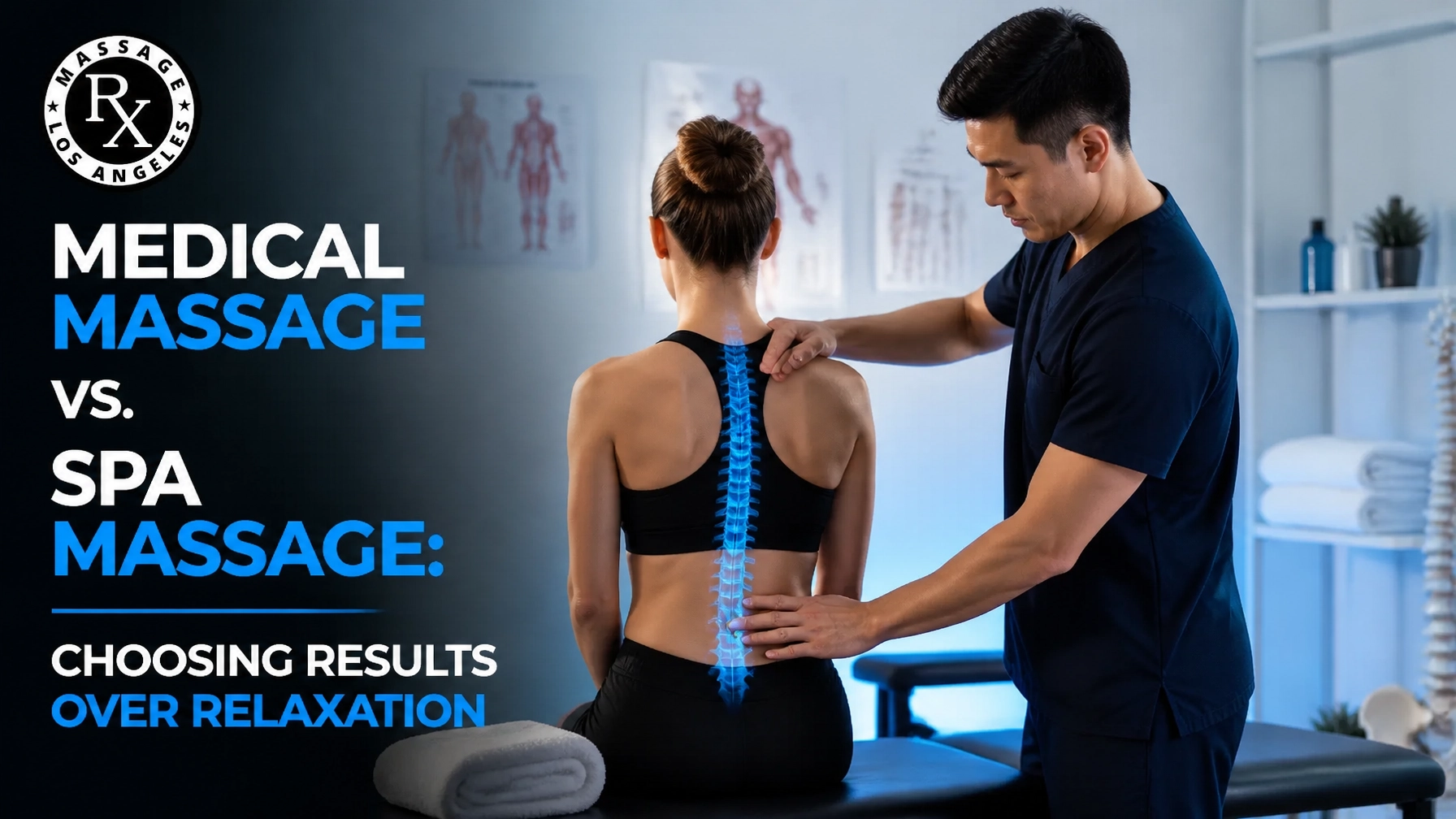
Why Stress Therapy Is Not Just a “Spa Massage”
When most people think of massage, they think of a dimly lit room, cucumber water, and someone gently rubbing oil on their skin for an hour. While that feels nice, it often doesn’t solve the problem. If you have chronic neck pain from stress, a “relaxing” massage might make you feel good for twenty minutes, but by the time you’re in your car fighting Los Angeles traffic, the pain is back.
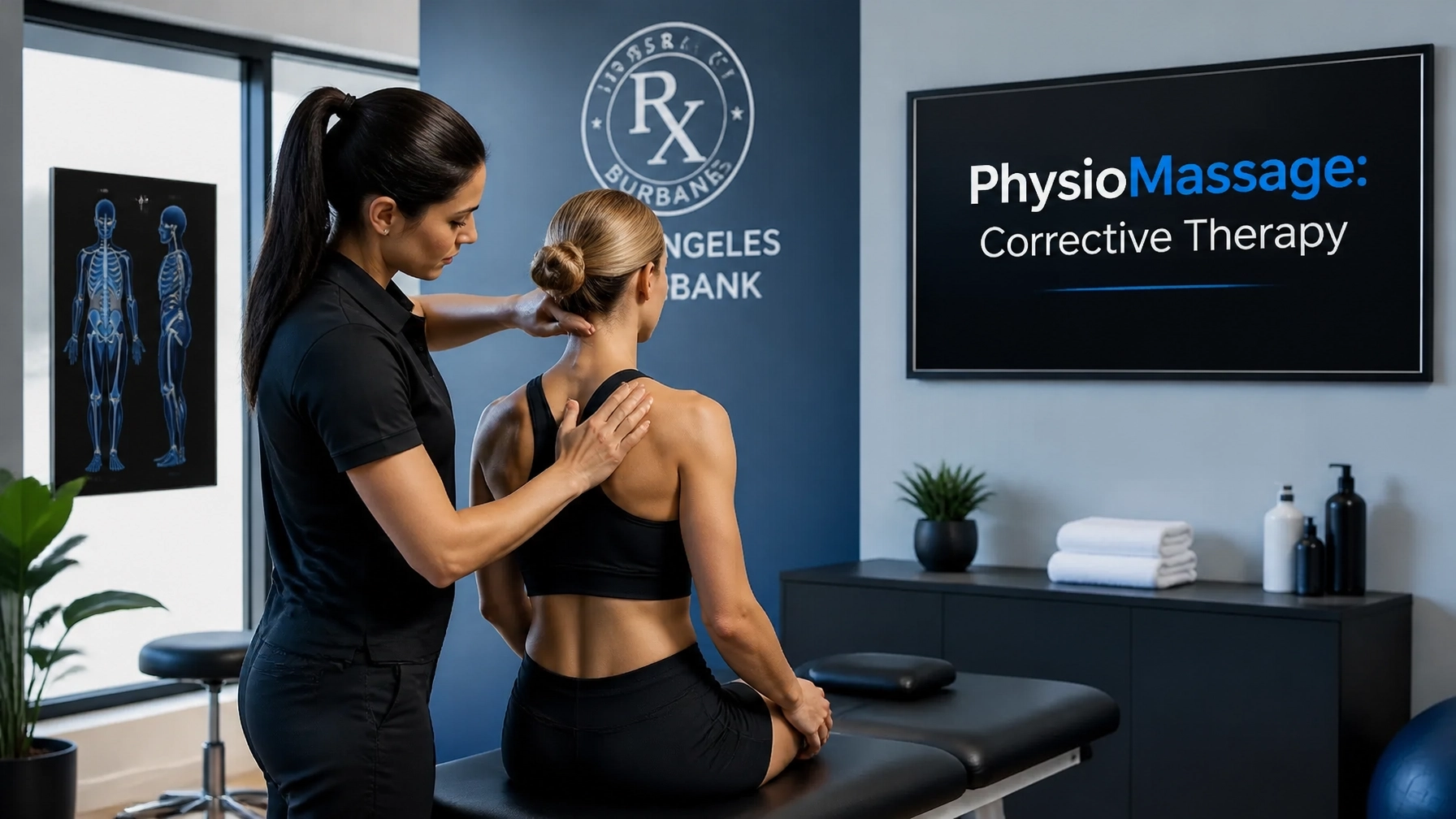
Stress Therapy at Life Rx is different. We use a structured system we call PhysioMassage. It’s a fusion of sports massage, medical manual therapy, and physical therapy techniques designed to achieve a clinical outcome.
Our formula is simple but powerful:
PhysioMassage = Assessment + Targeted Therapy + Reassessment + Recovery Plan
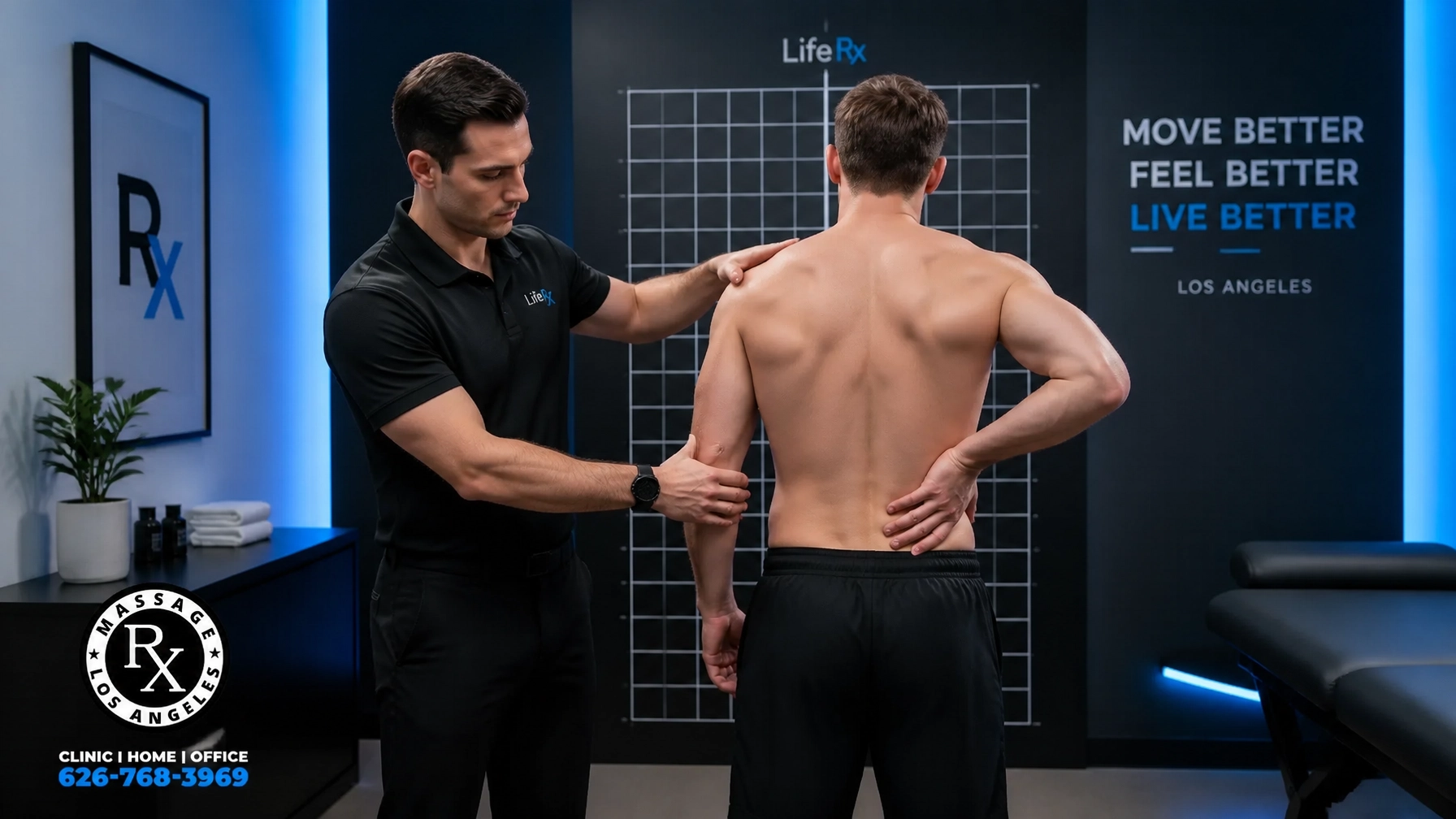
We don’t just start rubbing. We assess your posture, test your movement, and find exactly where your nervous system is holding onto tension. Only then do we use manual techniques to release those physical blocks.

Understanding the “Elephant” in the Room
There’s an old story about a group of people touching different parts of an elephant in the dark. One touches the trunk and says it’s a snake; another touches the leg and says it’s a tree. They are all right, but none of them see the whole picture.
The body is the same way. One therapist might tell you “it’s all fascia.” Another says “it’s all trigger points.” At Life Rx, we believe the body is too intelligent to be reduced to just one system. Stress affects your fascia, your muscles, your nerves, and your brain simultaneously.
Our Stress Therapy sessions focus on the whole “elephant.” We look at how your shallow “stress breathing” is fatiguing your neck muscles. We look at how your hip tightness might be a result of your body trying to stabilize itself while you’re stuck in a seated, “protective” posture all day.
Where Does Stress Hide in Your Body?
Stress is a master of disguise. It doesn’t always show up as a “stressed-out” feeling. Often, it shows up as:
1. The “Stress Coat” (Neck and Shoulders)
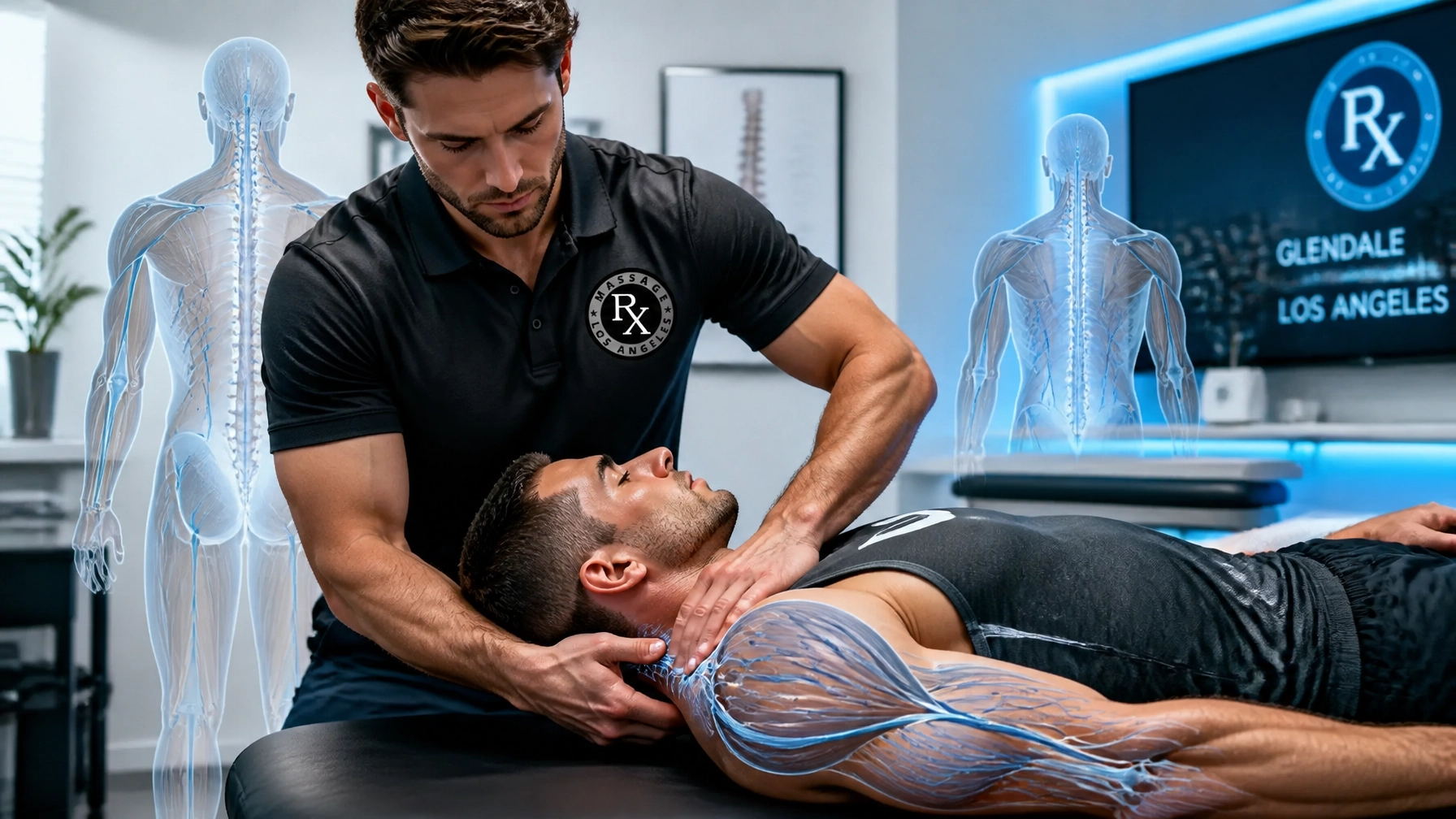
This is the most common physical manifestation of the modern fight-or-flight response. Your trapezius and levator scapulae muscles (the ones that shrug your shoulders) stay active all day. This leads to that heavy, “weight of the world” feeling in your upper back.
2. Tension Headaches
When the muscles at the base of your skull (the suboccipitals) get tight from stress and poor posture, they can compress nerves and restrict blood flow, leading to those dull, aching headaches that wrap around your forehead like a tight band.
3. Lower Back and Hip Tightness
Believe it or not, your hips are deeply connected to your stress response. The psoas muscle, a major hip flunctor, is often called the “muscle of the soul” because it is so closely linked to the sympathetic nervous system. When you are stressed, your psoas tenses up, which can pull on your lower back and cause chronic discomfort.

Shifting from “Fight or Flight” to “Rest and Digest”
The goal of our Stress Therapy is to help your body shift out of the sympathetic state (Fight or Flight) and into the parasympathetic state (Rest and Digest).
Manual therapy may help reduce the physical symptoms of stress by:
- Calming the Nervous System: Targeted touch sends signals to the brain that the “threat” is gone, allowing the heart rate to slow and breathing to deepen.
- Releasing Physical Guarding: By manually stretching and releasing tight tissues, we break the cycle of “tension causing pain, and pain causing more tension.”
- Improving Body Awareness: We help you notice where you are clenching your jaw or shrugging your shoulders so you can catch yourself before the pain becomes chronic.
Long-Term Correction: Beyond the Session
We aren’t just here to give you a one-hour escape. We want to help you live a life with less pain. That’s why every PhysioMassage session ends with a Recovery Plan.
We might show you a specific stretch to open up your chest, or give you a movement cue to help you sit more neutrally at your desk. We want to evolve your posture from the “slumped office worker” back to a healthy, upright human.

Ready to Feel Normal Again?
Pain is not just a symptom; it is a message from your body telling you that something is out of balance. If you are dealing with neck pain, shoulder stiffness, or chronic tension, your body is likely stuck in a stress loop.
Don’t ignore the message.
At Life Rx, we provide on-demand therapeutic services that come directly to your home in Los Angeles or at our Glendale clinic. Whether you are in Burbank, Studio City, Beverly Hills, or Hollywood Hills, our licensed professionals are ready to help you address the root cause of your discomfort.
Connect With Us:
- Watch Our Class: Learn more about our techniques and philosophy on YouTube.
- Masterclass on Patreon: Dive deeper into body mechanics and recovery on Patreon.
- Book Your Session: Ready to get started? Book online here.
If you have questions or want to learn more about how PhysioMassage may help your specific situation, give us a call at (209) 273-5376.
Book your PhysioMassage session with Life RX and let our team help you move better, feel better, and live with less pain.

Leave A Comment