
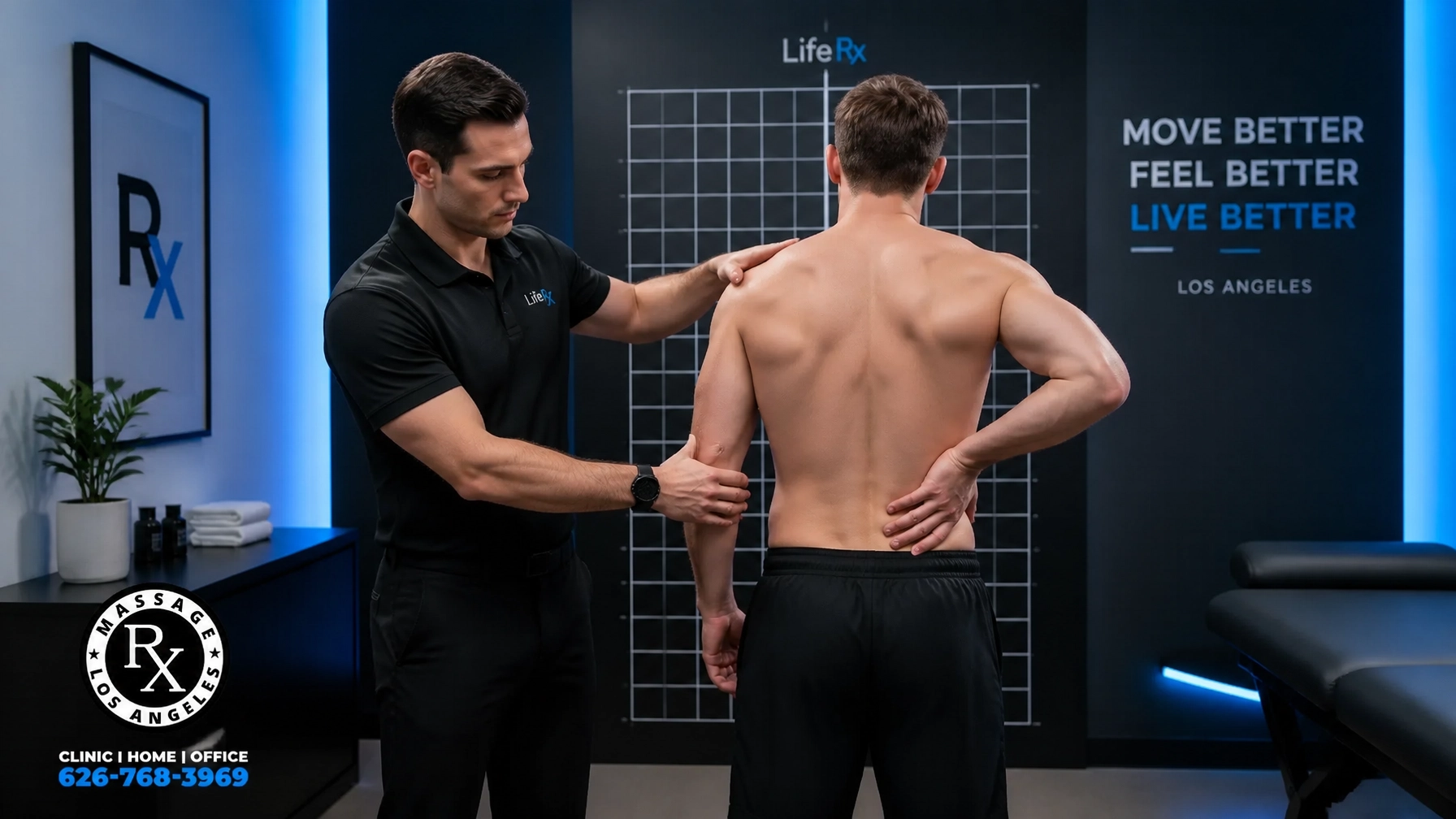
You wake up with that familiar, nagging ache in your lumbar spine. Your first instinct? Reach for your toes. You spend ten minutes breathing through a deep forward fold, feeling a temporary “release,” only for the stiffness to return with a vengeance two hours later. If this sounds like your daily routine, you aren’t alone. Many people in Los Angeles are stuck in a “stretching loop” that actually prevents their body from healing.
At Life Rx : PhysioMassage Los Angeles, we see this every day. Most clients come to us after months of aggressive yoga or “stretch therapy” that hasn’t moved the needle. The reality is that lower back pain is rarely a “tightness” problem: it is usually a stability and alignment problem.
If you are looking for the best Lower Back Pain Massage Los Angeles has to offer, you need to understand why pulling on your spine might be the very thing keeping you in pain. Here are 10 reasons your stretching routine is failing you and how our unique PhysioMassage system provides the long-term correction you need.
1. You are Stretching an “Over-Stretched” Muscle
This is the most common mistake. When a muscle feels “tight,” we assume it is short and needs to be lengthened. However, in many cases of lower back pain, the muscles are actually eccentrically loaded: meaning they are already pulled taut like a rubber band because your pelvis is out of alignment.
When you stretch an already over-stretched muscle, you increase the strain on the tendons and ligaments. Instead of relaxing the muscle, your nervous system triggers a “protective spasm” to prevent further damage. This is why you feel tight again almost immediately.
2. You are Ignoring the Hip Flexors
The lower back is often the victim, not the criminal. In our Postural Correction Massage sessions, we frequently find that the real culprit is a pair of tight hip flexors (psoas) from prolonged sitting at a desk.
Tight hip flexors pull the pelvis forward into an anterior tilt, which arches the lower back and compresses the vertebrae. Stretching the back further only adds to this compression. To fix the back, you must first “Check and Correct” the hips.

3. The “Dormant” Glute Problem
Your glutes are the primary stabilizers for your lower back. If your glutes are weak (a condition often called “gluteal amnesia”), your lower back muscles have to work overtime to keep you upright.
Stretching your back doesn’t wake up your glutes. In fact, aggressive stretching can further inhibit the very muscles you need for stability. At Life Rx, we focus on PhysioMassage Los Angeles techniques that release the tension in the back while teaching you how to re-engage your powerhouse muscles.
4. The Sciatica Massage Glendale Trap
If you are experiencing shooting pain down your leg, you might be searching for a Sciatica Massage Glendale specialist. Many people try to “stretch out” sciatica by doing deep piriformis stretches or toe touches.
However, sciatica is often caused by nerve compression or “neural tension.” Nerves do not like to be stretched; they like to be “glided.” Aggressive stretching can irritate the sciatic nerve further, increasing inflammation and making the pain sharper. Our therapists use manual therapy to create space for the nerve rather than just pulling on it.
5. You are Stretching into Instability
Think of your spine as a mast on a ship. The muscles are the ropes holding it steady. If the ropes are too loose, the mast wobbles. Many people with chronic back pain actually have too much mobility in certain segments of their spine and not enough stability.
Stretching further decreases that stability, making you more prone to “throwing your back out” during simple movements. We focus on “Check first, Correct first” to ensure we are only releasing what is actually restricted.
6. Ignoring Postural Imbalance
Your body is a connected chain. A problem in your feet or a restriction in your neck can change how your lower back moves. If you only stretch the area that hurts, you are ignoring the root cause.
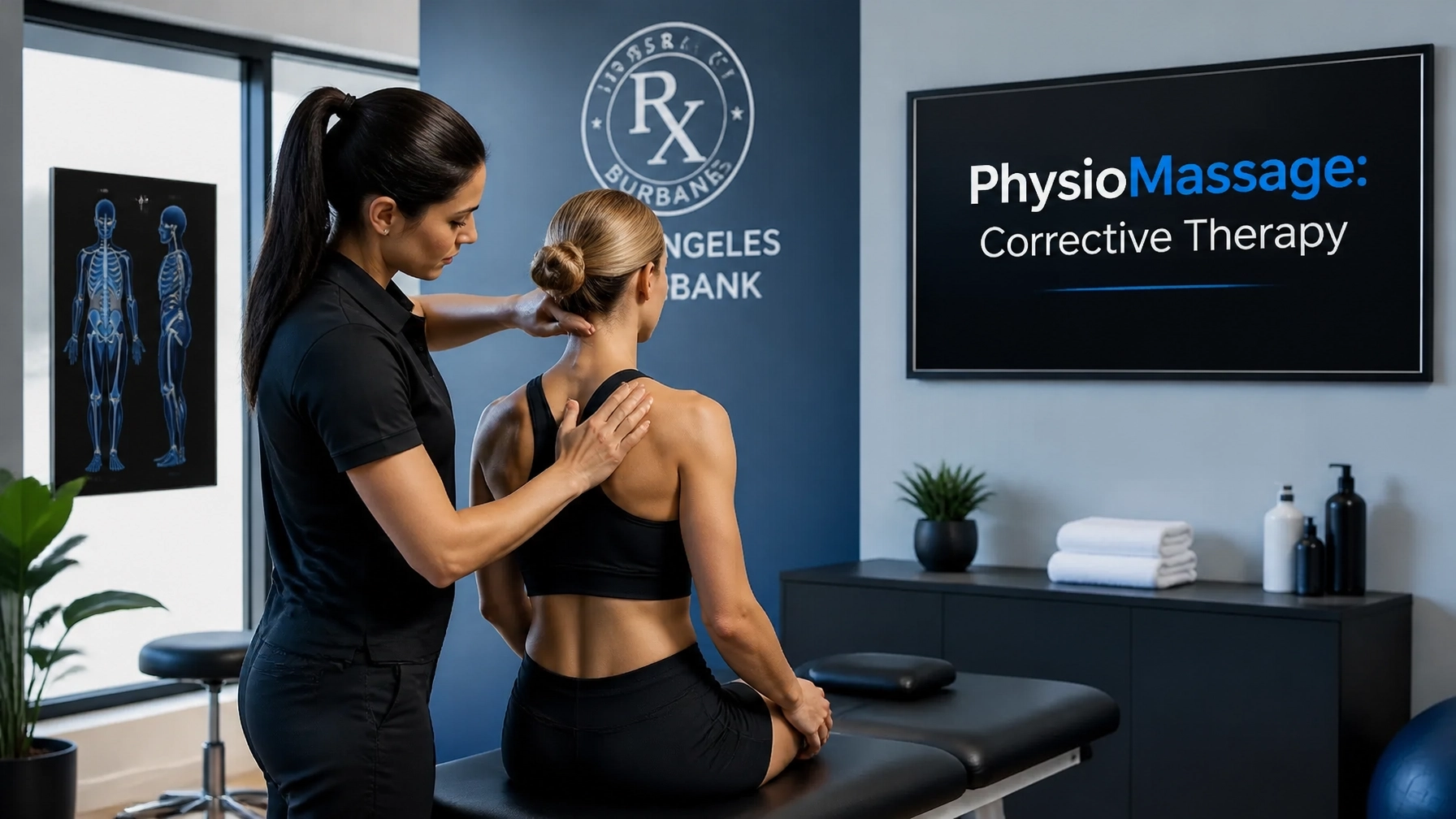
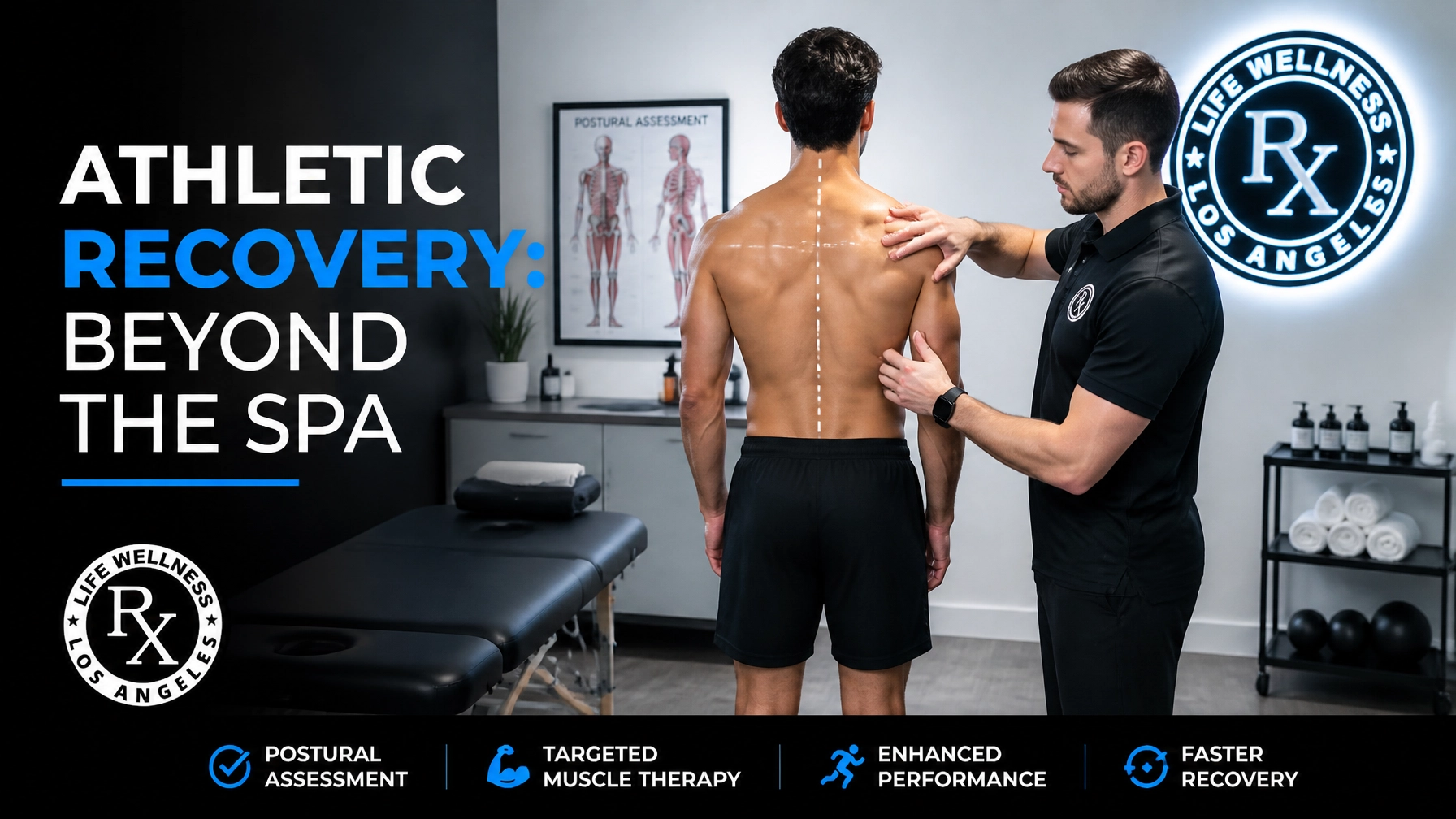
During a PhysioMassage session, we perform a comprehensive postural assessment. We look at how you stand, how you walk, and where your weight shifts. This is the difference between a “spa massage” and a corrective therapy system.

7. The Temporary Relief Mirage
Stretching feels good in the moment because it stimulates the nervous system and releases endorphins. It creates a “mirage” of progress. But if the underlying structural issue: like a pelvic tilt or a ribcage flare: isn’t addressed, the relief is purely chemical and temporary.
Our goal at Life Rx is measurable change. We want you to feel better not just on the table, but three days later when you are lifting your kids or playing sports.
8. Stretching into Compensation
When one part of your body is stuck, another part moves too much to compensate. If your mid-back (thoracic spine) is stiff from hunching over a laptop, your lower back will try to do the “moving” for it.
Stretching your lower back in this scenario just reinforces the compensation pattern. You need targeted manual therapy to open up the thoracic spine so the lower back can go back to its job of being stable.
9. Neglecting the “Check First” Mantra
Most people stretch based on how they feel, not on what their body needs. At Life Rx, we live by the mantra: Check first, Correct first.
Before we apply any pressure, we test your range of motion. We check your hip internal rotation, your spinal flexion, and your core engagement. If a movement “checks” as restricted, we “correct” it with targeted PhysioMassage. If we don’t check first, we are just guessing.

10. The Absence of a Recovery Plan
A single stretch: or even a single massage: is rarely enough to fix years of postural habits. Real change requires a plan.
At Life Rx, every session ends with a customized recovery path. This might include specific “Check and Correct” drills you can do at home or an invitation to our Zaratka morning classes. Without a plan, you are just chasing symptoms.
How PhysioMassage Fixes the Pattern
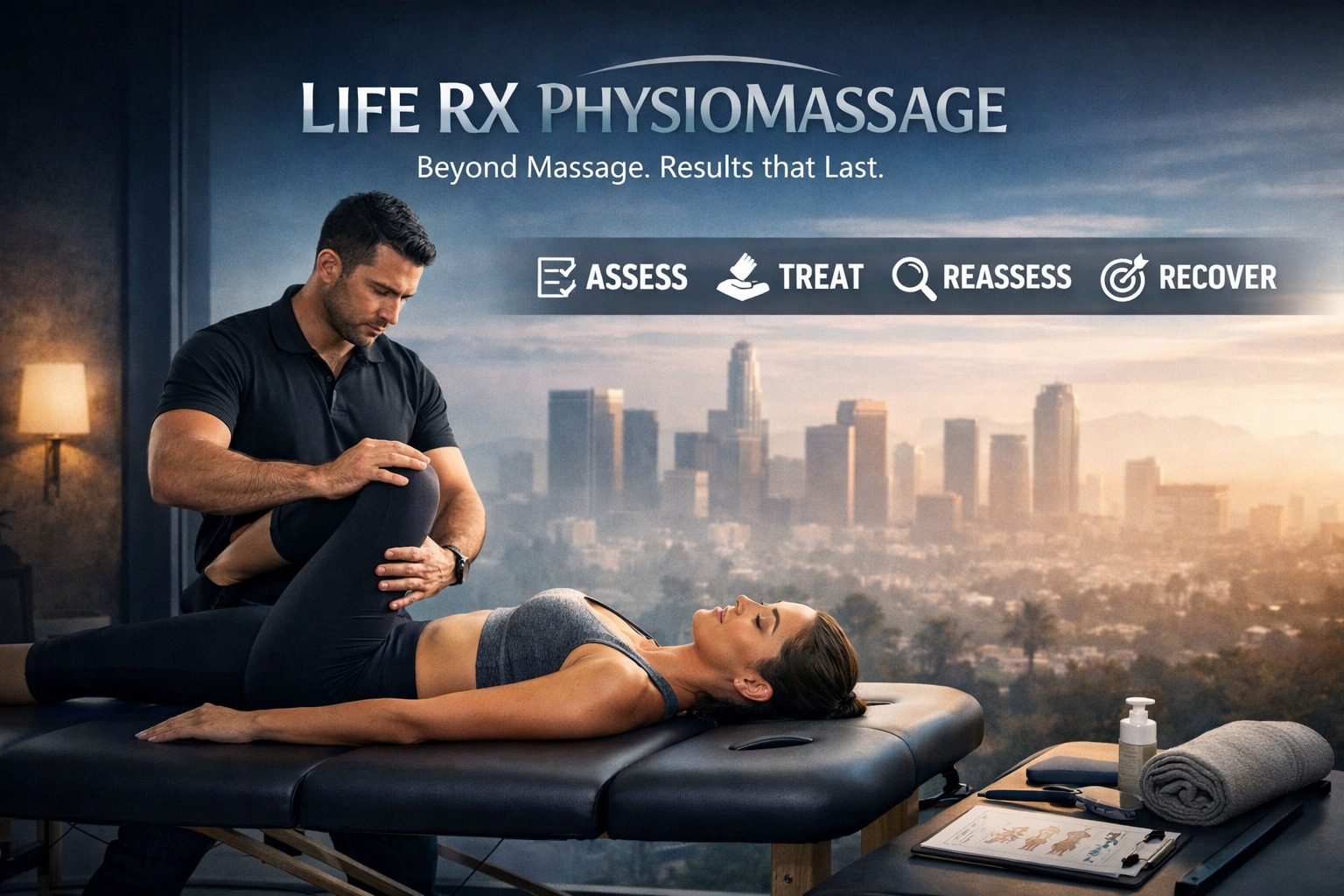
PhysioMassage is not a “relaxation” service; it is a structured corrective therapy process. Here is how we address lower back pain differently:
- Assessment: We use movement testing and postural analysis to find the “why” behind your pain.
- Targeted Therapy: We use a fusion of medical massage, sports massage, and physical therapy techniques to release specific restrictions.
- Reassessment: We test your movement again after the treatment to prove the session worked.
- Recovery Plan: We give you the tools to maintain your results at home.
Whether you are dealing with chronic stiffness, a sports injury, or the need for Postural Correction Massage, our team of licensed professionals is here to guide you. We offer services at our Glendale clinic or directly in your home across Los Angeles, including Burbank, Studio City, and Beverly Hills.
Check Your Body Every Morning with Zaratka
If you want to stop the cycle of bad stretching, join our Zaratka morning class. Held at 7:30 AM LA time, this class is designed to help you “check your body before you load your body.”
Through mobility work and muscle activation, Zaratka helps you identify restrictions early in the day so you can correct them before they turn into pain. You can catch these sessions live or on our YouTube channel.

Ready to Move Better?
Stop guessing with your health. If your lower back pain is holding you back from enjoying life in Los Angeles, it’s time for a professional assessment.
Book your PhysioMassage session with Life Rx and let our team help you move better, feel better, and live with less pain.
- Watch Our Class: https://www.youtube.com/@LifeRxWellness
- Book The Session: https://massagerxla.com/
- Masterclass on Patreon: https://www.patreon.com/c/liferxhealth
- Call Us: (209) 273-5376
Join LifeRX Wellness classes to upgrade your massage skills, improve your body awareness, and learn how to move, assess, and grow like a professional. Follow the LifeRX channel for massage education, Zaratka morning classes, postural assessment, and professional therapist growth.



Leave A Comment