

You crushed Runyon Canyon Saturday morning. Hit a CrossFit PR Sunday afternoon. Now it’s Tuesday, and you can barely lift your arms to type an email.
Sound familiar?
Los Angeles is packed with weekend warriors: people who work hard all week, then go absolutely feral on their bodies during off-hours. Hiking Griffith Park at sunrise. Running the beach path in Santa Monica. Climbing at Sender One. Playing pickup basketball at Venice Beach. The enthusiasm is amazing. The recovery strategy? Not so much.
Here’s the truth: your body doesn’t care that you’re “just a hobbyist.” It responds to mechanical stress the same way a professional athlete’s does. And if you’re treating recovery like an afterthought, you’re setting yourself up for nagging injuries, chronic tightness, and performance plateaus that’ll keep you sidelined when you should be leveling up.
That’s where sports massage at home in Los Angeles changes the game entirely.
THE WEEKEND WARRIOR INJURY CYCLE (AND WHY IT KEEPS HAPPENING)
Let’s talk about what’s really going on with your body.
When you push hard during workouts: whether that’s trail running, lifting, or spin classes: your muscles accumulate metabolic waste products, develop micro-tears, and tighten up as a protective mechanism. This is completely normal. It’s how you get stronger.
The problem? Most weekend warriors skip the recovery part.
You might stretch for 30 seconds after a workout (if you remember). Maybe you foam roll while watching Netflix. But without proper intervention, those tight muscles stay tight. Those micro-tears don’t heal optimally. And the compensation patterns you develop: favoring one side, altering your gait, adjusting your form: create the perfect storm for injury.

Common weekend warrior injuries we see constantly:
- IT band syndrome from running without proper hip mobility
- Rotator cuff issues from CrossFit overhead movements with tight shoulders
- Lower back pain from hiking with weak glutes and tight hip flexors
- Achilles tendinitis from sudden increases in training volume
- Tennis elbow from gripping too hard during climbs or lifts
The astonishing part? Most of these are 100% preventable with the right recovery protocol.
SPA MASSAGE VS. PHYSIO MASSAGE: WHY THE DIFFERENCE MATTERS
Here’s where things get real.
When most people think “sports massage,” they picture a spa setting. Dim lights. Relaxing music. Maybe some lavender oil. Someone rubbing your muscles in a generally pleasant way for 60 minutes.
That’s fine if you’re looking for stress relief. But if you’re trying to actually fix mechanical dysfunction, it’s completely inadequate.
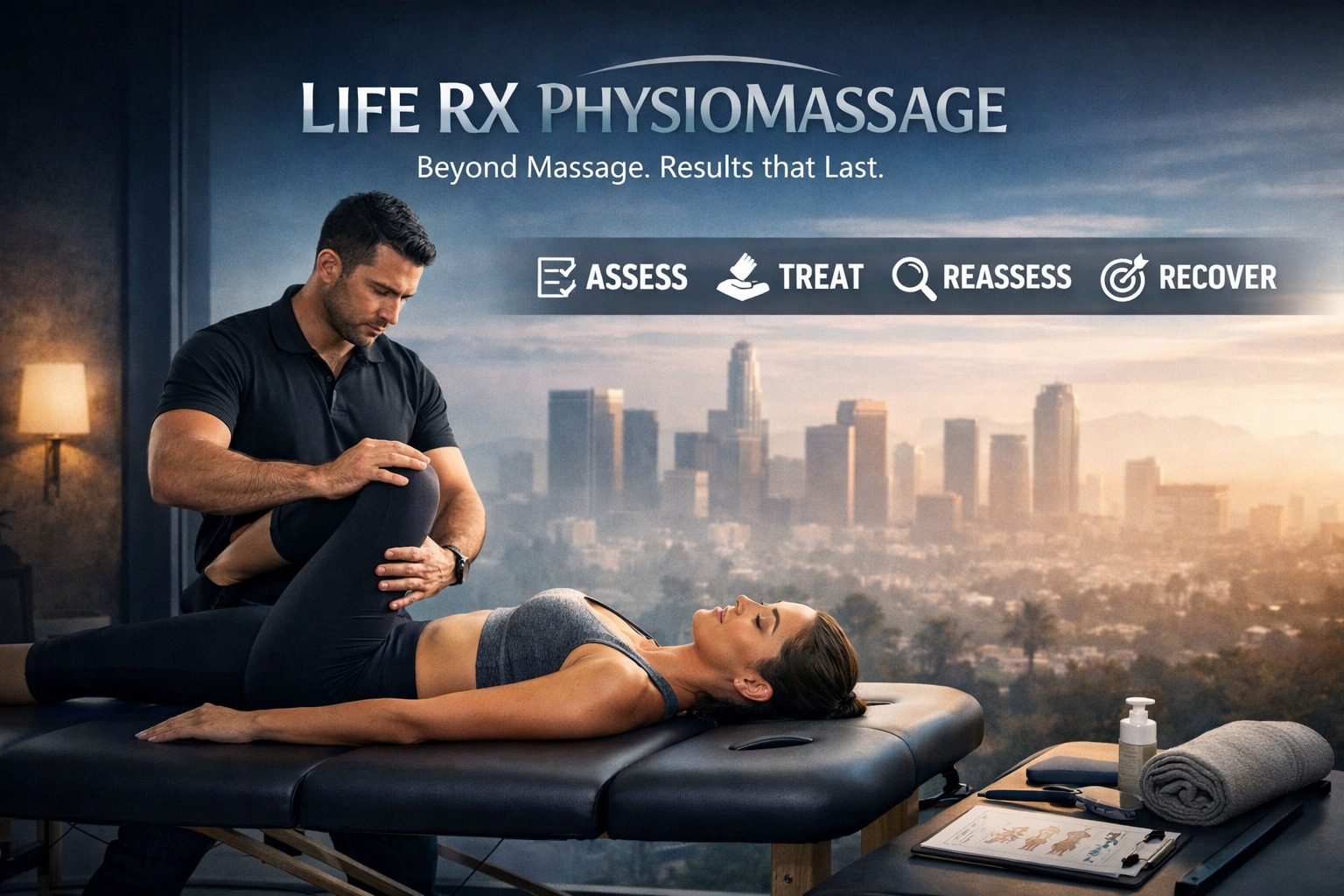
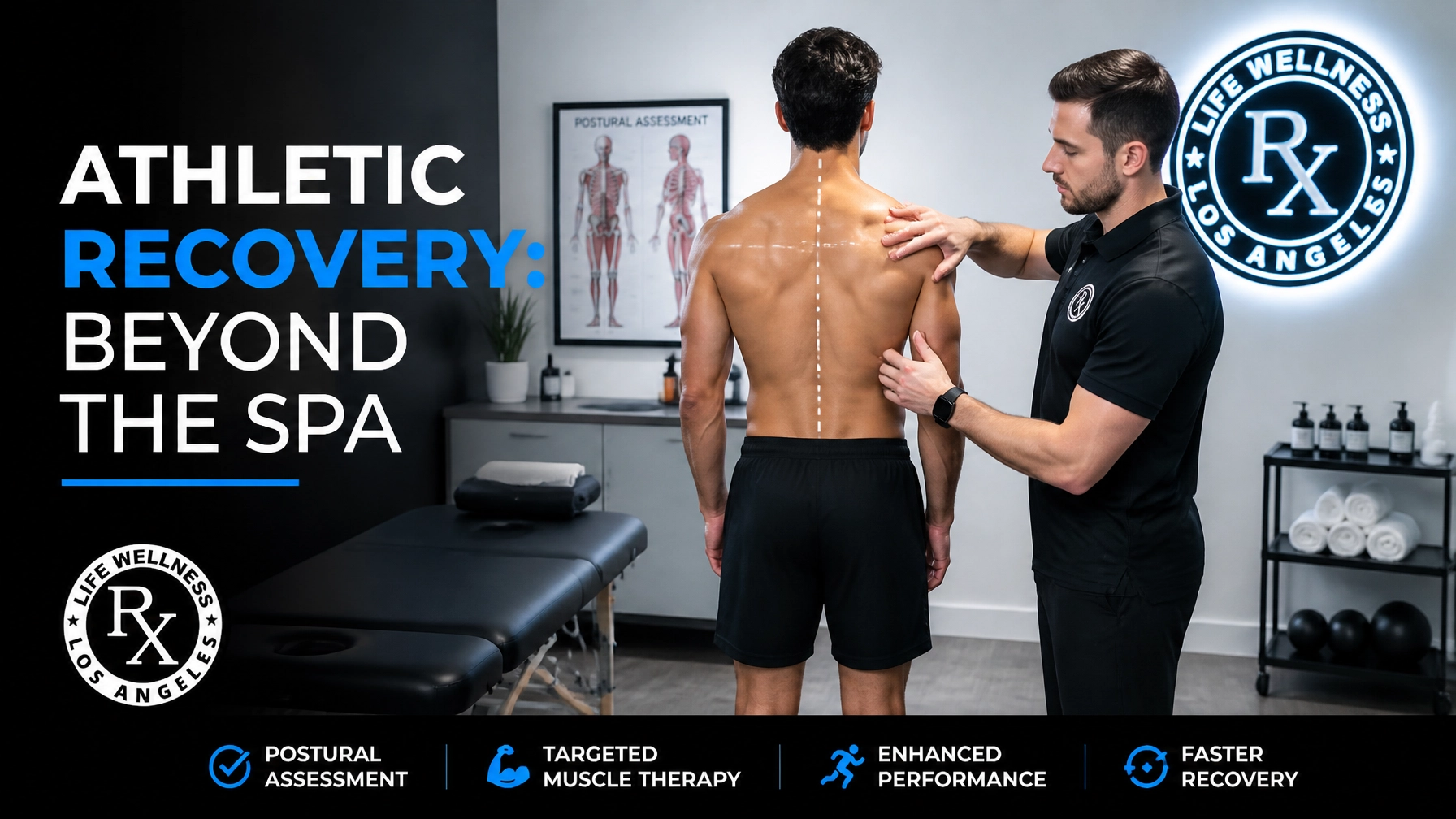
PhysioMassage in Los Angeles is a different animal entirely. We’re not here to make you feel zen (though you might). We’re here to identify what’s broken, fix the underlying issue, and give you a roadmap so it doesn’t happen again.
Think of it this way: a spa massage is like taking a scenic drive. PhysioMassage is like having a mechanic diagnose why your engine keeps overheating, repair the cooling system, and teach you how to maintain it properly.
Both involve touching your muscles. Only one creates substantial, measurable change in how your body moves and performs.
THE 4-STEP METHOD THAT ACTUALLY WORKS
This is where licensed professionals separate themselves from people who just “give good massages.”
Our approach to rehabilitation massage in Los Angeles follows a clinical protocol that ensures you’re not just feeling better temporarily: you’re actually getting better.
STEP 1: ASSESSMENT (FINDING THE REAL PROBLEM)
Before we touch a muscle, we need to understand what’s actually happening. We assess your movement patterns, test your range of motion, identify compensations, and pinpoint where dysfunction lives in your body.
Most people are shocked to discover that their knee pain is actually caused by hip weakness. Or that their shoulder issue stems from thoracic spine immobility. The pain location and the problem source are often different.
This assessment phase is where most spa massages completely fail. They treat symptoms without ever identifying root causes.
STEP 2: TREATMENT (MANUAL THERAPY THAT TARGETS THE SOURCE)
Now we get hands-on with targeted manual therapy techniques designed to release fascial restrictions, break up adhesions, restore proper muscle function, and reset dysfunctional movement patterns.
This isn’t about relaxation: though many clients report feeling incredibly loose afterward. It’s about creating specific mechanical changes in tissue quality and joint function.

We use techniques from multiple disciplines: myofascial release, trigger point therapy, muscle energy techniques, and proprioceptive neuromuscular facilitation. Translation? We have a full toolkit, and we use whatever your body needs in that moment.
STEP 3: REASSESSMENT (PROVING IT WORKED)
Here’s the part most massage therapists skip: we retest everything we assessed initially.
Can you now reach overhead without compensation? Did that hip rotation improve? Is your squat pattern cleaner? We measure the change so you can see: and feel: the difference immediately.
This builds trust. You’re not wondering if it worked. You know it worked because we just demonstrated it.
STEP 4: HOMEWORK (KEEPING THE GAINS)
The most important part of the session happens after we leave. We give you specific stretches, mobility drills, and strengthening exercises tailored to your dysfunction.
These aren’t generic “stretch your hamstrings” recommendations. They’re targeted interventions designed to maintain the changes we created and prevent the issue from returning.
Most clients spend 5-10 minutes daily on their homework. The return on investment is astounding: fewer injuries, better performance, and bodies that actually feel good consistently.
WHY AT-HOME RECOVERY IS THE ULTIMATE GAME-CHANGER
Let’s be honest about your life.
You work full-time. Maybe you have kids. Definitely have a packed schedule. The idea of driving to a clinic, finding parking, sitting in a waiting room, getting treatment, then driving home in LA traffic… it’s exhausting just thinking about it.
Mobile massage eliminates all that friction.
We come to you: your home, your office, wherever you need us. You get professional-grade treatment in your own space, then can immediately rest, hydrate, or continue with your day without the stress of commuting.

The convenience factor alone makes people substantially more consistent with their recovery protocol. And consistency is what creates long-term results.
Plus, there’s something powerful about recovering in your own environment. You can immediately foam roll if we recommend it. Hop in your own shower. Grab your specific supplements. Sleep in your own bed. The comfort factor accelerates healing.
For busy LA professionals who train hard on weekends, this setup is absolutely perfect. You don’t have to choose between recovery and having a life. You get both.
WHAT ACTUAL RESULTS LOOK LIKE
We work with weekend warriors all over Los Angeles who’ve transformed their training and recovery. Here’s what that typically looks like:
Week 1-2: Immediate reduction in pain and tightness. Improved range of motion. Better sleep quality due to reduced muscle tension and stress hormone levels.
Week 3-4: Noticeable improvements in performance. You’re moving better during workouts. Recovery between sessions is faster. Those nagging issues that used to flare up? They’re quieter or gone.
Month 2-3: Substantial changes in movement quality and body awareness. You can feel when something’s getting tight before it becomes an issue. Your homework routine is automatic. You’re preventing injuries instead of constantly reacting to them.
Long-term: You’re training harder and more consistently than before because your body can handle the load. The injury cycle is broken. You’ve leveled up your entire approach to fitness and recovery.
This isn’t magic. It’s what happens when you treat your body with the same professional attention that elite athletes get, delivered with the convenience that fits your actual life.
PRICING THAT MAKES SENSE FOR YOUR GOALS
We offer two options depending on your preference:
$220 for in-home sessions – We come to you with everything needed for a full clinical treatment. This includes the 4-step method, homework prescription, and the convenience of recovery in your own space.
$140 at our Glendale clinic – Full assessment and treatment in a professional setting. Same expertise, same results, just at our location instead of yours.
Both options deliver the same level of clinical care. Choose based on your schedule and preferences.
Ready to experience the difference? Book our “Start Here” offer for a complete assessment and customized treatment plan. Call (209) 273-5376 or visit https://massagerxla.com/ to schedule.
Want to dive deeper into recovery science and techniques? Watch Our Class on YouTube for free education, or join our Masterclass on Patreon for advanced protocols and programming.
YOUR BODY DESERVES A PROFESSIONAL RECOVERY STRATEGY

You put serious effort into your training. You research the best hiking trails, invest in quality gear, track your workouts, and push yourself to improve.
Why would you leave recovery to chance?
Sports massage at home in Los Angeles isn’t a luxury: it’s a strategic advantage. It’s how you keep doing the activities you love without constantly battling injuries, pain, and frustration.
Your weekend warrior lifestyle shouldn’t come with a side of chronic tightness and limitation. With the right recovery protocol, you can train hard, perform better, and actually enjoy the process instead of limping through it.
The LA fitness scene is competitive enough without fighting your own body. Let’s get you moving the way you’re supposed to move.
Book your “Start Here” assessment today. Call (209) 273-5376 or visit https://massagerxla.com/ to schedule your first session.
Your best training days are ahead of you: let’s make sure your body is ready for them.



Leave A Comment