

At Life RX, we believe that pain is not just a symptom : it is a message from your body. Usually, when your neck feels stiff or your shoulders feel like they’re carrying the weight of the world, you assume the problem is in the muscles themselves. You might look for a Neck Pain Massage in Glendale or try to stretch out your upper back.
But what if the root cause isn’t actually in your neck? What if the message is coming from your eyes?
The way you use your eyes directly dictates how your head moves, how your neck stabilizes, and how your entire body balances itself. In our modern world of constant screen time, we are inadvertently training our bodies to be stiff by keeping our eyes fixed in a single, narrow position for hours.
Today, we’re diving into the science of why calibrating your eyes is the first step toward recalibrating your body.
The Science: How Your Eyes Talk to Your Neck
There is a direct neurological highway between your eye muscles and a group of small, high-priority muscles at the base of your skull called the suboccipital muscles.
These muscles are responsible for fine-tuning your head position. They contain a massive density of sensory receptors: nearly 36 spindles per gram of tissue. To put that in perspective, your glutes only have about one. This means your suboccipitals are incredibly sensitive to every move you make.

Every time you shift your gaze, your brain sends a signal to these neck muscles to prepare for a head turn. This is called the cervico-ocular reflex. If your eyes are moving smoothly and exploring the space around you, your neck stays mobile.
However, when you stare at a screen, your eyes become “locked.” Because your eyes aren’t moving, your suboccipital muscles stay in a state of constant, isometric contraction. They are literally “bracing” to keep your head steady while you focus. Over time, this leads to chronic tension, tension headaches, and that familiar “heavy” feeling in your shoulders.
The Modern Problem: Screen Stress and “Fixed Gaze”
Most of us spend 8 to 12 hours a day staring at a laptop, phone, or monitor. When your eyes are fixed on a small area, your brain loses its sense of the peripheral space. This “tunnel vision” causes your head to creep forward: a phenomenon known as forward head posture.

When the head moves forward, the suboccipital muscles have to work even harder to keep your eyes level with the horizon. It’s a vicious cycle: tired eyes lead to a slumped neck, and a slumped neck makes it harder for your eyes to focus.
This is why “just sitting up straight” feels so difficult after a long day. Your eyes are essentially pulling your posture out of alignment. If you want to fix your posture, you have to start by training your eyes.
Zaryadka: Recalibrate Your Body Through Movement
In our movement philosophy, we use a concept called Zaryadka: a structured movement session designed to “charge” the body and restore natural function. One of the most effective tools in our Zaryadka toolkit is eye-training.
By moving your eyes through their full range of motion: up, down, left, right, and diagonally: you send a signal to your brain and neck that it is safe to move. It’s like hitting a “reset” button for your nervous system.
Try these simple eye-training exercises today:
- The Horizon Scan: Keep your head still and move your eyes as far left and right as possible, trying to see the periphery of the room.
- The Near-Far Reset: Focus on a pen held close to your face, then look at something 20 feet away. Repeat 10 times.
- The Infinity Loop: Trace a figure-eight with your eyes without moving your head.
To see these exercises in action and follow along with a full session, watch our class below.
Watch Our Class: Life RX Movement & Eye Training
How PhysioMassage Addresses the Eye-Neck Connection
While eye exercises are a great daily habit, many of us have years of “postural debt” built up in our tissues. This is where PhysioMassage Los Angeles comes in.
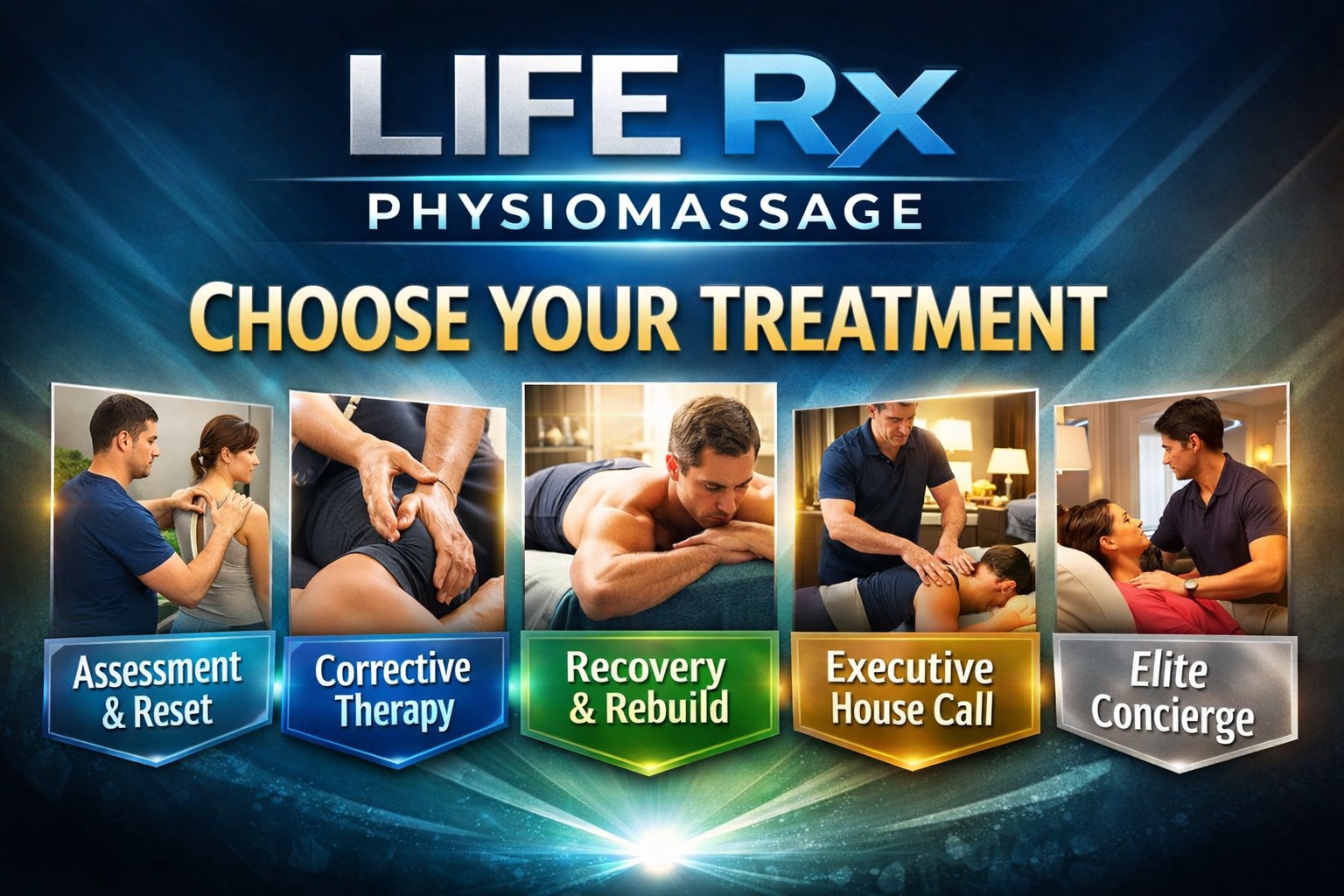
Unlike a regular spa massage that simply rubs the surface, our PhysioMassage is a structured corrective therapy system. We don’t just “relax” the muscles; we assess the root of the problem.

Our 4-Step Process:
- Assessment: We look at your eye-tracking and neck mobility to see how screen stress has affected your posture.
- Targeted Therapy: We use specialized manual techniques on the suboccipital muscles and the surrounding fascia to release the “lock” created by eye fatigue.
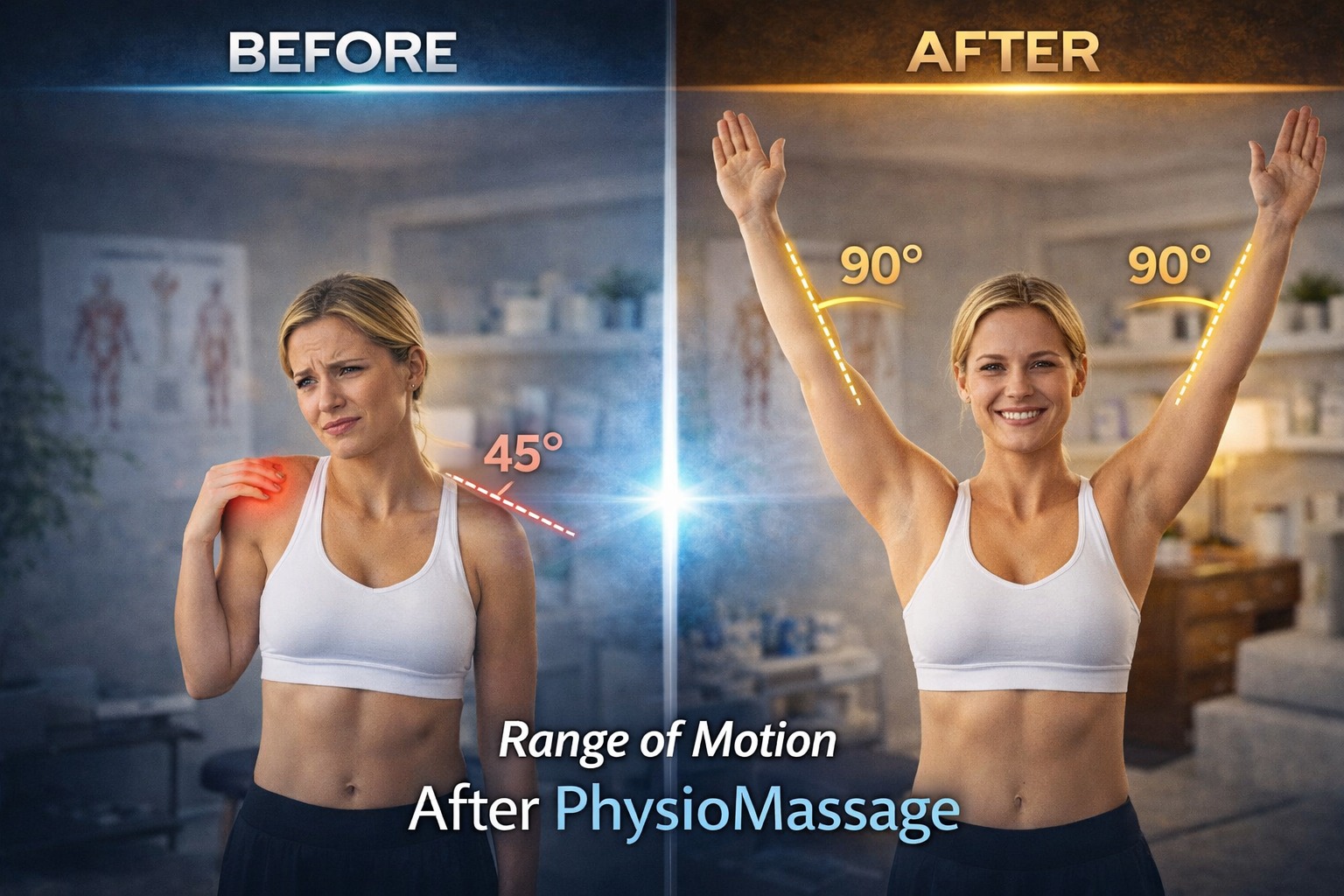
- Reassessment: We check your movement patterns again to ensure the tension has actually shifted.
- Recovery Plan: We give you a long-term plan (including eye exercises) to keep the pain from coming back.
Whether you are looking for Neck Pain Massage in Glendale or a more comprehensive Postural Correction Massage, our team is trained to understand the complex relationship between your vision, your brain, and your body.
Take Control of Your Movement
Your body is a highly integrated system. You cannot fix the neck without looking at the eyes, and you cannot fix the posture without looking at the brain.
By incorporating simple eye-training into your day and seeking out professional Therapeutic Massage in Glendale, CA, you can break the cycle of chronic tension and reclaim your mobility.
Ready to dive deeper?
- Watch Our Class: https://www.youtube.com/@LifeRxWellness
- Masterclass on Patreon: https://www.patreon.com/c/liferxhealth
- Book The Session: https://massagerxla.com/
If you have questions about your specific pain patterns or want to learn more about how PhysioMassage can help with your neck and shoulder tension, give us a call at (209) 273-5376.
Book your PhysioMassage session with Life RX and let our team help you move better, feel better, and live with less pain.





Leave A Comment