



You’ve been doing everything right. The stretches. The core exercises. The YouTube workout videos. Maybe you’ve even invested in physical therapy sessions.
And yet… your lower back still hurts.
If this sounds familiar, you’re not alone. Chronic lower back pain affects roughly 619 million people globally, and it’s the leading cause of disability worldwide. The frustrating part? Most people are told to “just keep exercising” without understanding why their efforts aren’t producing the results they expected.
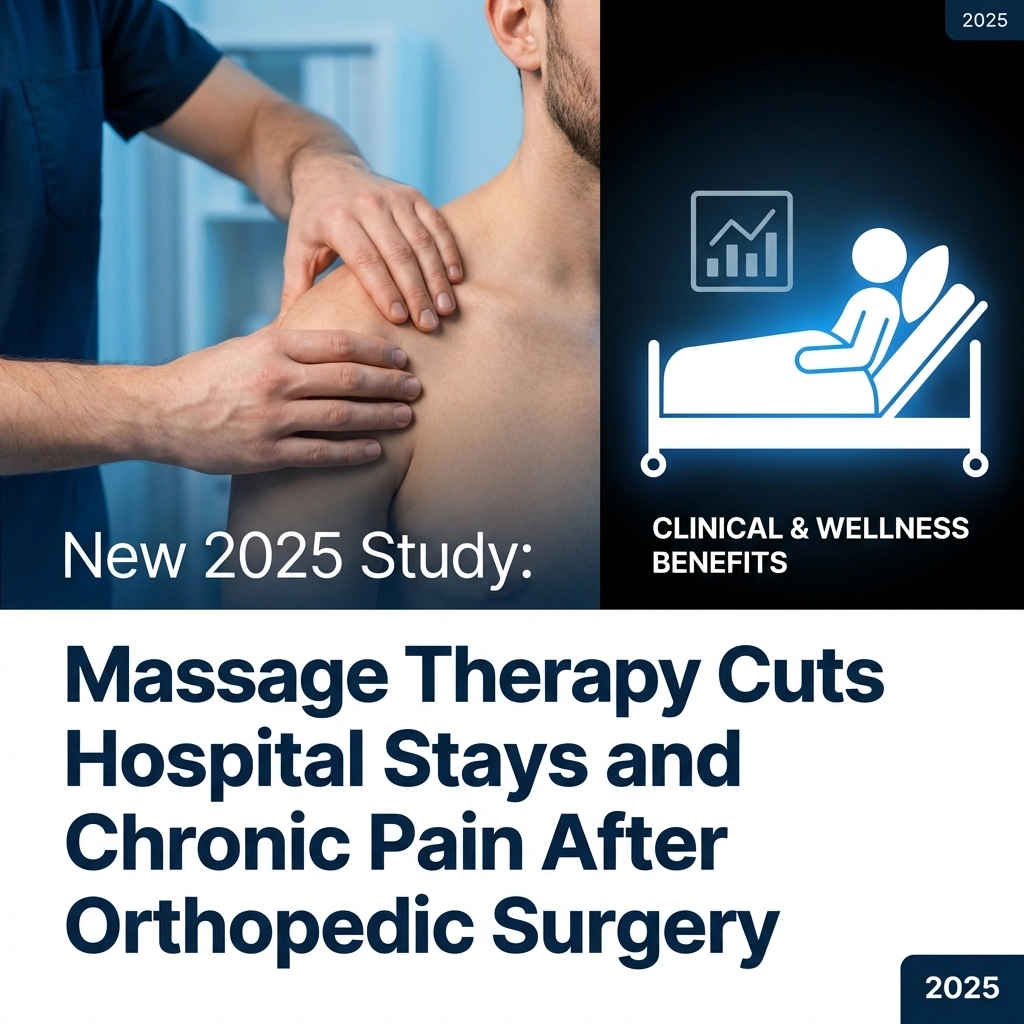
Here’s the thing: exercise works. It’s the gold standard for managing chronic lower back pain, and the research is crystal clear on that. But a groundbreaking systematic review published in June 2025 reveals something that changes the game entirely, adding manual therapy (like medical massage) to your exercise routine produces substantially better outcomes than exercise alone.
Let’s break down what this means for you and why the combination approach might be the missing piece in your recovery puzzle.
THE JUNE 2025 STUDY: WHAT THE RESEARCH ACTUALLY SAYS
The systematic review, published in Musculoskeletal Science and Practice, asked a simple but crucial question: Does adding manual therapy to exercise therapy improve pain and disability outcomes in chronic low back pain?
After analyzing multiple randomized controlled trials, the researchers found compelling evidence that the answer is yes.
Here’s what stood out:
- Pain reduction was significantly greater when manual therapy was combined with exercise compared to exercise alone
- Functional disability improved more substantially in the combination group
- The effects were measurable at both short-term and intermediate-term follow-ups
This isn’t about choosing between exercise OR massage. It’s about understanding that combining active treatment (exercise) with skilled manual therapy creates a synergistic effect that neither approach achieves on its own.
Think of it like this: exercise builds strength and stability, but manual therapy addresses the soft tissue restrictions, muscle tension, and movement dysfunction that often prevent exercises from working properly in the first place.

WHY YOUR EXERCISES MIGHT NOT BE WORKING (YET)
Let’s get real for a moment. If you have chronic lower back pain and you’ve been diligently doing your exercises without significant improvement, there are usually a few culprits:
1. Muscle Guarding and Protective Tension
When your back hurts, your body does something clever but counterproductive: it tightens surrounding muscles to “protect” the painful area. This protective tension becomes chronic over time, creating a vicious cycle where the muscles meant to support your spine are actually restricting healthy movement.
Exercise alone often can’t break through this guarding pattern. Your body simply recruits other muscles to compensate, reinforcing dysfunction rather than correcting it.
2. Fascial Restrictions and Adhesions
Your muscles don’t operate in isolation: they’re wrapped in connective tissue called fascia that can become stuck, restricted, or adhered after injury, inflammation, or prolonged poor posture. These restrictions limit range of motion and alter how forces distribute through your spine.
No amount of stretching will release fascial adhesions. They require direct manual intervention: the kind of skilled touch that medical massage provides.
3. Trigger Points That Refer Pain
Trigger points (those tender “knots” in your muscles) are notorious for referring pain to other areas. A trigger point in your gluteus medius can create pain that feels exactly like a disc problem. One in your quadratus lumborum can mimic kidney pain.
You can strengthen and stretch all day, but if active trigger points are driving your pain, you need targeted manual therapy to deactivate them.
THE SYNERGY EFFECT: HOW MANUAL THERAPY SUPERCHARGES YOUR EXERCISES
Here’s where things get exciting. When you combine chronic pain massage Los Angeles services with your exercise program, something remarkable happens:
IMPROVED TISSUE QUALITY BEFORE MOVEMENT
Manual therapy prepares your tissues for exercise by:
- Increasing blood flow and oxygenation to muscles
- Reducing muscle tone and protective guarding
- Breaking up fascial restrictions that limit movement
- Deactivating trigger points that cause referred pain
When your tissues are supple and responsive, your exercises actually target the muscles they’re supposed to target. Your core engagement improves. Your hip mobility increases. Your spine moves more freely.
ENHANCED PROPRIOCEPTION AND BODY AWARENESS
Skilled manual therapy doesn’t just work on muscles: it communicates with your nervous system. The pressure, movement, and stimulation from massage help “wake up” proprioceptors (sensors that tell your brain where your body is in space).
Better proprioception means better movement quality during exercise, which means faster progress and lower injury risk.
BREAKING THE PAIN-TENSION-PAIN CYCLE
Pain causes tension. Tension causes more pain. This cycle is exhausting and self-perpetuating.
Manual therapy interrupts this cycle by:
- Stimulating the release of endorphins (natural pain relievers)
- Activating the parasympathetic nervous system (rest and repair mode)
- Reducing cortisol and stress hormones that amplify pain perception
When you’re not fighting constant pain and tension, your exercises feel easier, you can push a little harder, and you recover faster between sessions.

WHAT MAKES MEDICAL MASSAGE DIFFERENT FROM SPA MASSAGE
Not all massage is created equal: especially when we’re talking about chronic lower back pain relief.
Medical massage at home Los Angeles services like our PhysioMassage approach are fundamentally different from what you’d get at a spa:
| Medical Massage | Spa Massage |
|---|---|
| Targeted to specific dysfunction | Generalized relaxation |
| Assessment-based treatment | Standard routine |
| Communicates with your healthcare team | Isolated service |
| Modifies techniques based on response | One-size-fits-all pressure |
| Focused on functional outcomes | Focused on feeling good |
Don’t get us wrong: spa massage feels wonderful and has its place. But when you’re dealing with persistent lower back pain that’s affecting your quality of life, you need a clinical approach that identifies what’s actually causing your symptoms and addresses it systematically.
Our PhysioMassage therapists are trained to:
- Assess your posture, movement patterns, and tissue quality
- Identify trigger points, fascial restrictions, and areas of dysfunction
- Apply targeted techniques including myofascial release, trigger point therapy, and neuromuscular work
- Coordinate care with your other providers (physical therapists, chiropractors, physicians)
- Progress treatment as your condition improves
This is pain relief massage Los Angeles that’s designed to produce measurable results: not just temporary relief.

THE IN-HOME ADVANTAGE FOR CHRONIC PAIN SUFFERERS
Here’s something the research doesn’t capture but matters enormously: stress undermines healing.
When you have chronic lower back pain, the last thing you need is to:
- Sit in LA traffic for 45 minutes to get to an appointment
- Walk across a parking lot when every step hurts
- Sit in an uncomfortable waiting room chair
- Rush home afterward feeling exhausted
In home massage Los Angeles eliminates all of this. Your therapist comes to you, sets up in your space, and delivers professional treatment while you’re already in your comfortable environment.
The result? Your nervous system stays calm. Your muscles don’t tense up from the stress of travel. You can rest immediately afterward without having to drive home.
For chronic pain management, this isn’t a luxury: it’s a strategic advantage that accelerates your recovery.
We serve the entire Los Angeles area, including North Hollywood, Hollywood, West Hollywood, Los Feliz, Eagle Rock, and surrounding neighborhoods.
YOUR ACTION PLAN: COMBINING MASSAGE WITH YOUR EXERCISE ROUTINE
Ready to experience the synergy effect? Here’s how to integrate home massage Los Angeles services with your current exercise program:
Week 1-2: Begin with an assessment session. We’ll identify your specific restrictions, trigger points, and dysfunction patterns. Initial treatment focuses on reducing pain and improving tissue quality.
Week 3-4: As tissue quality improves, we’ll coordinate with your exercise program. Ideally, schedule massage 1-2 days before your most challenging exercise sessions to optimize tissue readiness.
Week 5-8: Progress to maintenance frequency (every 1-2 weeks) as your pain decreases and function improves. Focus shifts to preventing recurrence and optimizing performance.
Ongoing: Many clients find that monthly maintenance sessions keep chronic pain from returning: especially if they have sedentary jobs or other risk factors.

TAKE THE NEXT STEP
The 2025 research confirms what we’ve seen clinically for years: exercise is essential, but it’s not the whole picture. When you add skilled manual therapy to your routine, you unlock substantially better outcomes for chronic lower back pain.
You don’t have to keep grinding through exercises that aren’t producing results. You don’t have to accept that “this is just how it is now.”
Here’s how to get started:
- Book Your Session: Visit massagerxla.com to schedule your first PhysioMassage appointment
- Watch Our Class: Learn more about our approach on YouTube
- Go Deeper: Access our Masterclass on Patreon for exclusive content on pain management and recovery
- Call Us Directly: Reach our team at (209) 273-5376 to discuss your specific situation
Your lower back pain has a solution. Let’s find it together.
Source:
“Does the addition of manual therapy to exercise therapy improve pain and disability outcomes in chronic low back pain?” Musculoskeletal Science and Practice. June 2025. https://www.sciencedirect.com/science/article/pii/S1360859224005564



Leave A Comment